

Top club bets right here!
Bet smarter with Ireland’s top online bookmakers — ranked for safety, bonuses, and unbeatable odds.





Dundalk FC – The Pride of the Wee County
Dundalk FC have always been more than a football club; they’re the heartbeat of County Louth. The Lilywhites, founded back in 1903 by railway workers, have built a legacy that mixes grit, glory, and a fair bit of Irish stubbornness. From their early League of Ireland days to magical European nights, the story of Dundalk is a reflection of Ireland’s footballing soul.
The club’s roots are humble — railway lads playing for pride and pints, not paychecks. By 1926, they joined the League of Ireland, and by 1933, they were champions. That was just the beginning. Over the decades, they’ve racked up league titles, FAI Cups, and a fair few famous scalps, all while keeping that working-class edge. Dundalk’s spirit has always been about defying odds and taking on the so-called big boys — and more often than not, giving them a proper rattle.
First deposit up to €300


- Attractive Bonuses & Promotions
- Fast & Secure Payments
- Wide Game Selection


€1000 + 200 FS
- Award-Winning Game Selection
- Generous Bonuses & Promotions
- Fast & Secure Payments



20 Free Spins
- Huge Selection of Premium Games
- Generous Bonuses & Promotions
- Fast & Secure Payments


➤ History and Highs
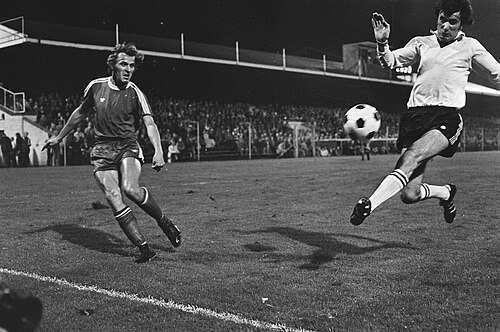
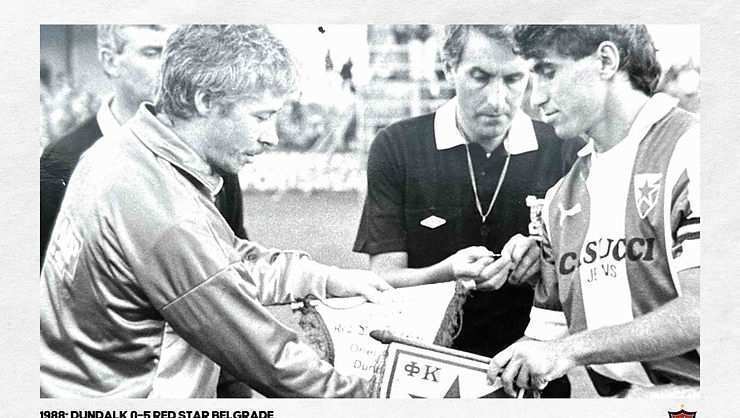
The 1970s and 80s saw Dundalk firmly establish themselves among Ireland’s elite. Under Jim McLaughlin, the club tasted both domestic and European success, taking on continental teams with a fearless attitude that made Irish fans proud. There were trips to places like Amsterdam and Glasgow, where the Lilywhites battled giants on shoestring budgets but never lacked heart.
Then came the Stephen Kenny era — the golden age. Between 2014 and 2019, Dundalk were untouchable. League titles, FAI Cups, and nights that’ll live forever. The 2016 European campaign remains the stuff of legend. Dundalk went toe-to-toe with AZ Alkmaar, Maccabi Tel Aviv, and Zenit St. Petersburg, becoming the first Irish club to win in a Europa League group stage.
The night Robbie Benson scored against BATE Borisov to send Dundalk through to the groups was pure euphoria. The roar at Tallaght Stadium that night could’ve powered the whole of Louth. It wasn’t just a win; it was a statement — that Irish football belonged on the European map.
➤ Big Wins and Glorious Nights
Some victories live forever in Dundalk folklore. The 2015 league decider against Cork City — what a night! Oriel Park was rocking, and when Richie Towell smashed home that late goal to seal the title, the noise could’ve been heard in Drogheda. The celebrations spilled into the streets, car horns blaring, flags flying, and pints raised to the heavens.
Another unforgettable triumph came in 2018, when Dundalk thrashed Bray Wanderers 5–0 to clinch the league title with swagger and style. That team was pure class — Towell pulling strings, Hoban banging in goals for fun, and Chris Shields bossing the midfield like he owned the place.
And then there was the FAI Cup final in 2015 against Cork — extra-time drama, a Hoban header, and the roar of tens of thousands of travelling fans. It was one of those moments where you realise this club doesn’t just play football — it creates memories.
European nights have their own special magic too. The 1–1 draw away to AZ Alkmaar, where Gary Rogers pulled off world-class saves, and that famous win over Maccabi Tel Aviv — those matches turned Dundalk from a local hero into a national symbol. Every Irish fan, no matter their colours, was cheering that team on.
➤ Legends in White
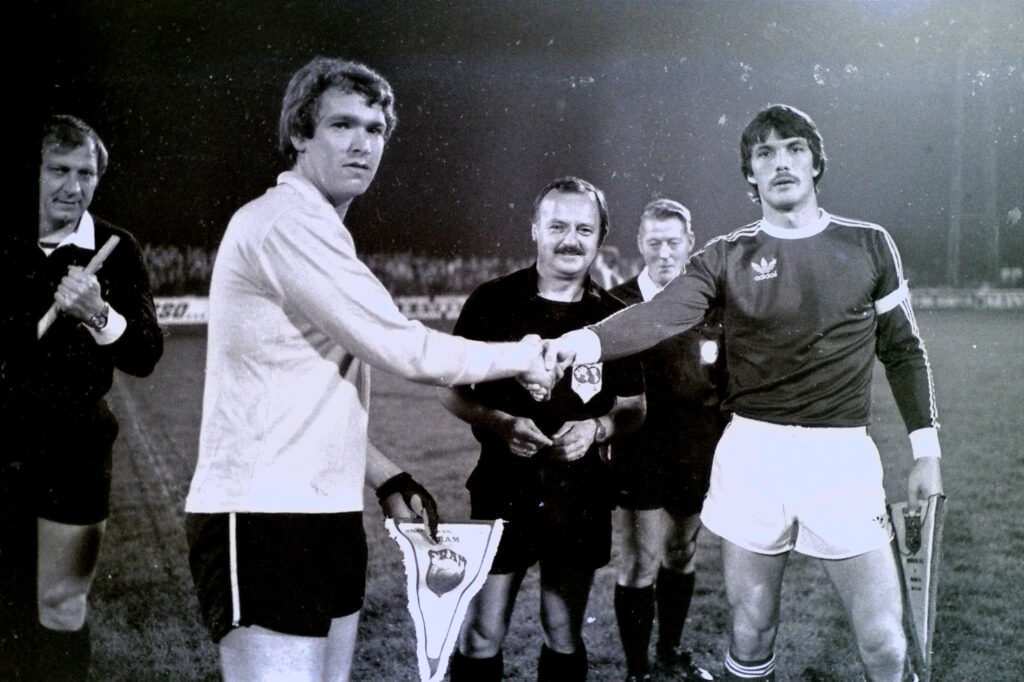
Dundalk’s history is filled with names that mean everything to fans: Pat Hoban, Daryl Horgan, Chris Shields, Richie Towell, and Brian Gartland — men who gave blood and sweat for the crest. Hoban, especially, is pure class — record goalscorer, leader, and a lad who bleeds black and white.
And Stephen Kenny, the architect of modern glory — his vision transformed the club and set new standards for Irish football. Every fan knows that without him, the European dreams might never have come true.
➤ Important Moments That Shaped the Club
Through all the glory and graft, a few moments truly defined Dundalk FC’s story. The 1979 FAI Cup win over Waterford was one — a victory that cemented their place among Ireland’s greats. The 1995 relegation battle, when the club looked doomed but survived on the final day, kept the flame alive during dark times.
Then there was 2012 — the Great Escape. The club was broke, the team struggling, and relegation seemed inevitable. But under caretaker boss Darius Kierans, Dundalk fought like lions and survived. That same year, Stephen Kenny walked through the doors at Oriel Park, and everything changed.
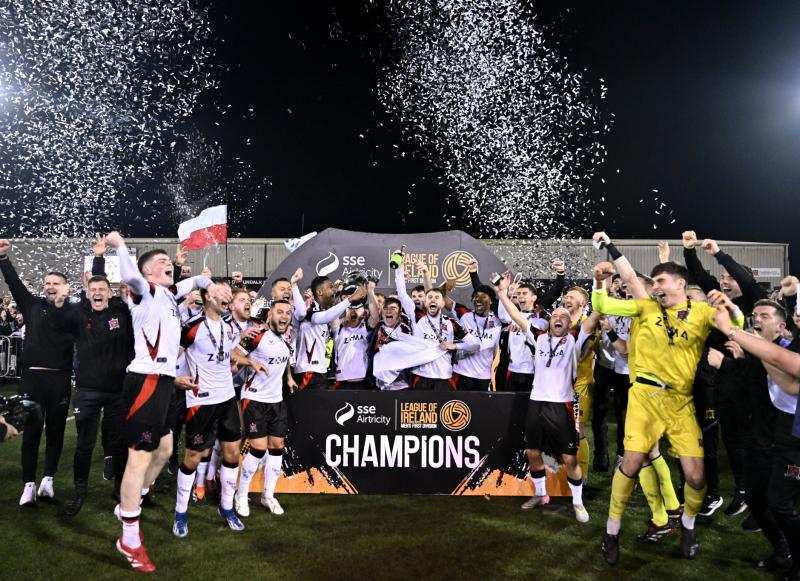
And who could forget 2014 — the first league title under Kenny after years in the wilderness Fans flooded the pitch, hugging strangers, tears everywhere. It wasn’t just a trophy — it was redemption, the rebirth of a club that had clawed its way back from the brink.
Even the heartbreaks became part of the story — the 2020 FAI Cup final defeat still stings, but it proved that Dundalk remain among the top dogs, no matter the setbacks.
➤ Rivalries and Fierce Fixtures
No Irish football story is complete without a few grudges, and Dundalk have their fair share. The rivalry with Shamrock Rovers is as fierce as it comes — Dublin swagger versus Louth grit. Every clash is heavy tackles, high tension, and more emotion than a GAA final.
Then there’s the Louth Derby against Drogheda United — pure passion. Families split in two, pubs divided, and the bragging rights lasting months. There’s something special about those matches; they’re not just about points — they’re about pride.
Cork City and Derry City have also given Dundalk some cracking battles in recent years, with plenty of drama and late goals. But no matter the opponent, one thing’s certain — Dundalk never back down.
➤ Oriel Park – Heart of the Town
Oriel Park isn’t just a ground; it’s a shrine. The stands might be tight, the paint might be peeling, but every corner holds a story. On matchday, the place buzzes with energy. Locals pile in from pubs and housing estates, scarves flying, chips steaming, and the smell of rain on concrete hanging in the air.
The Shed End is the soul of the stadium — chants, banter, and that raw emotion that no corporate stadium can ever replicate. Generations of fans have stood there, shouting themselves hoarse, roaring the team over the line. It’s the kind of place where strangers become friends by full-time — or enemies if you’re wearing green and white.